Choosing a Deep Well Drilling Machine is not a brochure exercise. It is a decision about geology, water demand, site access, and long-term service. UNESCO’s 2022 World Water Development Report, Groundwater: Making the Invisible Visible, estimates that groundwater represents about 99% of Earth’s liquid freshwater. That scale matters. So does the local formation beneath the drill pad.
Start with evidence. Review borehole logs, expected depth, rock hardness, casing diameter, and the required daily yield. Then compare rotary, down-the-hole hammer, and other drilling methods against those conditions. A rig that looks powerful may still be a poor match for fractured rock or a narrow, muddy access road. Check compressor capacity, torque, feed force, rod handling, fuel use, and parts availability. Small details count. A worn hammer bit can turn a planned shift into hours of delay.
Hydrogeologist John Cherry’s work underscores the importance of understanding groundwater systems before making design decisions. A useful field rule captures that lesson: “Match the machine to the ground, not the sales claim.” Treat it as a selection principle, not a verbatim quotation. Ask suppliers for verifiable performance records, service references, and specifications tied to comparable sites. Check what the machine can sustain, not merely its best-case depth. There is no perfect rig. Even a careful choice may need revision when field conditions differ from the logs. That uncertainty deserves attention, not optimism. A sound comparison weighs productivity against maintenance, operator skill, transport, and the cost of downtime. The right Deep Well Drilling Machine is the one that fits the geology and can be supported throughout the project.
Before comparing deep well drilling machines, define the target depth, finished bore diameter, and expected ground conditions. These factors work together. A 150-metre well through loose sand may require different equipment from the same-depth bore in competent rock. Review nearby well logs and geological maps for clay, cobbles, fractured layers, and likely water-bearing zones. Unknowns matter. Treat preliminary geology as an estimate, not a promise.
The USGS report Estimated Use of Water in the United States in 2015 recorded 82.3 billion gallons per day of groundwater withdrawals, about 25% of total freshwater withdrawals. The EPA estimates that more than 23 million U.S. households rely on private wells. These figures underline why drilling plans should match the site.
Check that a machine’s rated depth applies to your planned hole diameter and tooling, rather than relying on its maximum catalogue figure. Ask for operating details such as torque, pullback, and casing-driving capacity for the expected formation. Larger diameters generally need more power and can reduce penetration speed. A tidy specification sheet can still mislead. Recheck assumptions after examining local records and the actual site.
Deep-well drilling machines are best compared by drilling method and mobility. A down-the-hole hammer uses compressed air to drive a bit through hard rock, often producing fast penetration in suitable formations. It may be less effective in loose, unstable layers, where the borehole can cave. Mud rotary drilling circulates fluid through the hole to lift cuttings and help support its walls. It can suit mixed or softer ground, but requires space to manage drilling fluid and clean the well afterward. This matters.
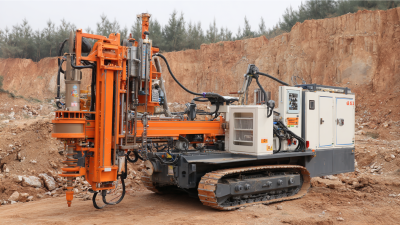
Rig configuration affects where the machine can work. Truck-mounted rigs travel efficiently between accessible sites and can carry useful support equipment. Crawler-mounted rigs handle uneven ground better, though their size and weight can limit access. Trailer-mounted units may be easier to transport to smaller sites, but their capacity varies widely. The carrier does not determine the drilling method; some platforms can support different setups.
Match the rig to the expected geology, target depth, bore diameter, water conditions, and available site space. Ask for records from nearby wells, and check which casing sizes the rig can install. Confirm the crew has suitable compressors or fluid systems, rather than judging capacity from the machine’s appearance. The choice is rarely tidy. Ground conditions can change with depth, so a drilling plan should allow for adjustments instead of assuming one method will work throughout.
Compare indicative drilling-depth ranges by rig type. These broad ranges are for initial selection only; actual capacity depends on the rig model, drilling method, geology, borehole diameter, and site conditions.
Use the expected well depth and ground conditions as your starting point. Confirm rated depth, required borehole diameter, mobility, and available drilling fluids or air systems with the equipment supplier before choosing a machine.
Choosing drilling capacity starts with the actual bore, depth, and ground conditions—not the largest number on a specification sheet. Rated depth can vary with the drill rods, bit, and soil or rock being drilled. Match the machine’s torque and feed force to the toughest expected layer. Ask for performance data at your intended bore diameter. That detail matters.
Power should support steady drilling without forcing the engine or motor to work at its limit. Compare output, fuel or energy use, and access to a suitable power source at the site. In practice, a rig that handles dense ground slowly may be more useful than one with impressive speed on paper. Noise, heat, and maintenance needs deserve attention too. I would check these early, even if the sales sheet makes them seem secondary.
Look closely at the mast, rod handling, flushing system, controls, and stabilizers. A rigid mast helps keep the bore aligned, while reliable flushing clears cuttings from the hole. Check that routine service points are reachable and that emergency stops and guards are practical to use. A machine can meet the capacity target and still be awkward on uneven ground. Test the setup, if possible, with the crew and tools that will actually be on site. Some details only become obvious after a long shift.
Before comparing depth ratings, map the route from road to borehole. Measure gate width, overhead clearance, turning space, slope, and ground bearing conditions; a rig that fits on paper may not pass a wet, narrow access track. Check whether the machine can travel under its own power or needs a separate carrier. A short setup can save hours. The USGS report Estimated Use of Water in the United States in 2015 recorded 82.3 billion gallons per day of freshwater groundwater withdrawals, underscoring the scale of work these wells support. That figure is national, though; local geology and access conditions should guide your choice.
Match mobility to the actual site. A compact crawler may suit soft ground and tight turns, while a truck-mounted unit may move faster between accessible locations. Confirm transport dimensions, setup footprint, mast clearance, and room for rods, casing, water, and spoil. Then compare required depth, bore diameter, drilling method, power supply, and daily operating hours. The International Energy Agency’s 2024 report on geothermal energy notes that drilling can account for up to half of project costs, so operating needs deserve careful review. Ask for realistic fuel, crew, and maintenance estimates, not just rated capacity. Even a detailed site plan can miss seasonal mud or a low branch; recheck after rain, and allow room for error.
A deep well drilling machine should make safe operation practical, not merely promise high output. Check that the mast locks securely, rotating parts have guards, and emergency stops are easy to reach. Ask how the machine handles uneven ground and changing soil conditions. On site, loose hoses and poor footing can become serious hazards. Small details matter. Confirm that operators can read the controls clearly and access the manual before work begins.
Maintenance affects both uptime and safety. Look for accessible service points, clear inspection intervals, and readily available replacement parts. Ask what daily checks are needed for cables, hydraulic lines, drill rods, and braking systems. A checklist beside the machine can help crews spot leaks or unusual vibration early. It is easy to miss. Still, a complicated maintenance routine may be skipped when schedules tighten, so judge the design by what crews can realistically maintain.
Compare total cost of ownership, not just purchase price. Include fuel or power use, routine servicing, consumables, transport, training, and likely downtime. Request service estimates based on your expected hours and ground conditions. A cheaper machine may cost more if parts take weeks to arrive. That adds up. Leave room in the budget for unexpected repairs; estimates are useful, but they are not guarantees.
Planning guide: The figures below are illustrative USD estimates, not quotations or guaranteed machine specifications. Actual depth, purchase price, operating cost, and service needs depend on geology, borehole diameter, drilling method, location, utilization, and configuration. TCO assumes 1,000 operating hours per year for five years; labor, financing, taxes, site preparation, transport, and resale value are excluded. Confirm specifications and service intervals with the machine supplier and its manual.
| Machine profile | Typical application and indicative depth range | Safety assessment | Maintenance considerations | Illustrative purchase budget | Estimated five-year maintenance | Estimated annual fuel and wear items | Illustrative five-year TCO |
|---|---|---|---|---|---|---|---|
| Compact truck-mounted rig Rotary or air-rotary configuration |
Smaller water-well projects and sites with access or transport constraints. Indicative depth: approximately 300–600 m, subject to ground conditions, tooling, and hole diameter. | Check mast condition and locking pins, rotating-part guards, emergency stop, hose and pressure-line condition, lifting points, and vehicle stability. Confirm safe access around the mast and establish an exclusion zone during drilling. | Inspect hoses, connections, fluid levels, and safety devices before each shift. Track engine and compressor service hours, lubricate as specified, and inspect drill rods and threads regularly. Follow the manufacturer’s service schedule. | $180,000–$350,000 Modelled case: $250,000 |
$125,000 Modelled at $25,000 per year |
$45,000 per year Modelled five-year total: $225,000 |
$600,000 Purchase + five-year maintenance + five-year fuel and wear items |
| Medium truck-mounted rig Rotary, mud-rotary, or air-rotary configuration |
General-purpose water-well drilling where greater reach or production capacity is needed. Indicative depth: approximately 500–1,000 m; actual capacity varies with formation and setup. | In addition to basic guarding and emergency stops, assess mast-raising procedures, hydraulic-system integrity, high-pressure air or mud lines, lifting capacity, and operator visibility. Verify that alarms, interlocks, and pressure relief devices are fitted and functional where required. | Budget for scheduled engine, compressor, hydraulic, and rotary-head servicing. Monitor wear on rods, bits, seals, and pumps; inspect structural welds and mast components. Keep service records and plan maintenance around operating hours. | $400,000–$800,000 Modelled case: $600,000 |
$250,000 Modelled at $50,000 per year |
$90,000 per year Modelled five-year total: $450,000 |
$1,300,000 Purchase + five-year maintenance + five-year fuel and wear items |
| Heavy-duty deep-well rig High-capacity rotary or combined drilling system |
Large-diameter, deep, or demanding projects that require higher hoisting and rotary capacity. Indicative depth: approximately 1,000–2,000 m for some configurations; confirm the rated capacity for the intended method and borehole. | Conduct a documented risk assessment for heavy lifts, mast loading, pressurized systems, noise, and site movement. Verify rated load limits, guards, emergency stops, pressure controls, operator training, and exclusion zones. Check that the ground can support the rig and support equipment. | Plan for specialist inspection of the mast, hoisting system, rotary drive, compressor or mud pumps, and hydraulic components. Maintain critical spares, inspect high-wear tooling, and use condition and service-hour records to reduce unplanned downtime. | $900,000–$1,800,000 Modelled case: $1,200,000 |
$500,000 Modelled at $100,000 per year |
$180,000 per year Modelled five-year total: $900,000 |
$2,600,000 Purchase + five-year maintenance + five-year fuel and wear items |
Selection check: Compare machines at the required borehole diameter and target depth, not depth rating alone. Before purchase, verify local safety and emissions requirements, operator training needs, parts availability, service response time, transport requirements, and the supplier’s written maintenance schedule.