A Pneumatic Rotary Hammer Drill converts compressed air into rapid piston strikes and rotary motion. Unlike a standard electric drill, it can break concrete while turning a masonry bit. The operator hears a sharp, repetitive impact and feels vibration through the handle. That physical feedback matters on dense brick, block, and reinforced concrete.
The U.S. Department of Energy’s Compressed Air Sourcebook reports that leaks can waste 20% to 30% of a compressed-air system’s output. This makes air supply a practical performance issue, not a minor detail. Many pneumatic tools operate near 6.3 bar, or 90 psi, but the correct pressure depends on the model. A small compressor may run continuously and still fail to maintain impact power. It happens more often than expected.
Professional selection also requires safety judgment. ISO 11148-5 covers requirements for hand-held non-electric power tools, including drills and rotary hammers. NIOSH recommends controlling occupational noise exposure around 85 dBA over an eight-hour shift. Hearing protection, eye protection, secure hoses, and regular coupler inspections remain essential. Moisture in the airline can also reduce reliability and damage internal parts.
This guide explains what a Pneumatic Rotary Hammer Drill is, how its hammer mechanism works, and where it performs best. It also examines air consumption, bit compatibility, vibration, maintenance, and compressor sizing. Product labels can be confusing. A tool marketed as a “hammer drill” may offer only light percussion, while a true rotary hammer delivers stronger piston impact. Real jobsite results depend on more than advertised impact energy.
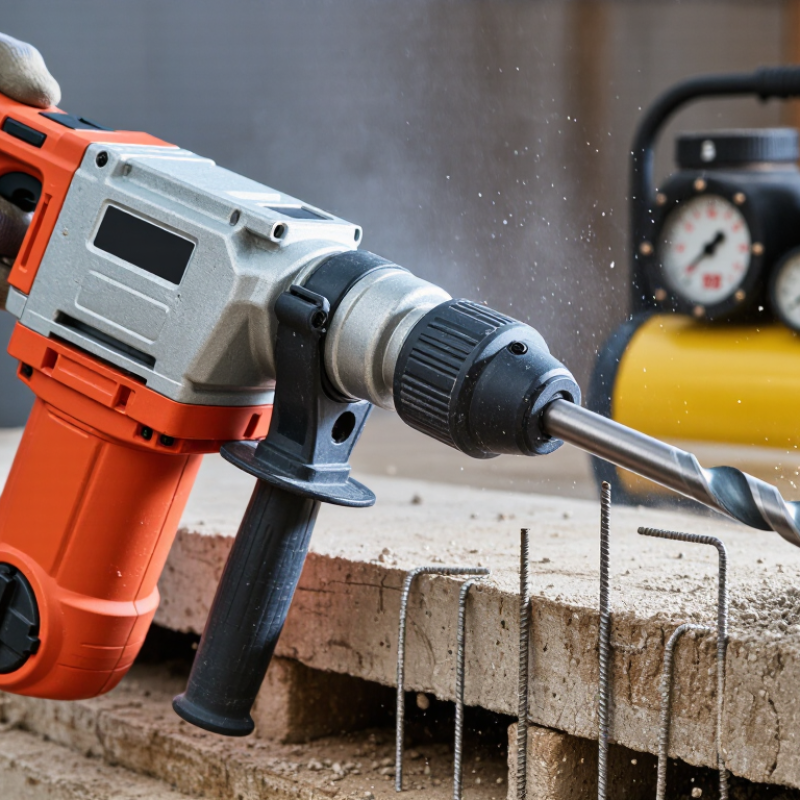
What Is a Pneumatic Rotary Hammer Drill?
Definition and Core Function of a Pneumatic Rotary Hammer Drill
A pneumatic rotary hammer drill is a power tool driven by compressed air. It combines rotation with repeated hammering force. This action helps break through concrete, brick, stone, and other hard masonry.
Inside the housing, an air-powered piston moves rapidly back and forth. The piston strikes an internal striker, transferring impact energy to the drill bit. At the same time, an air motor rotates the bit. Rotation clears material from the hole, while impact loosens the surface. That combination makes drilling faster than using rotation alone.
Compressed air matters greatly. A weak compressor can reduce impact strength and slow the job. Moisture in the air line may also damage internal parts over time. Operators usually check hose connections, airflow, lubrication, and bit condition before drilling. Ear protection, eye protection, gloves, and stable footing remain important in dusty work areas.
The tool is not simply a stronger electric drill. It needs suitable air pressure and steady air volume. A common mistake is choosing a drill by impact force alone. Hole size, material density, working angle, and bit type also affect performance. In practice, operators may notice vibration changes before visible damage appears. That warning should not be ignored.
The definition sounds simple. Real use is less predictable. Fresh concrete, cracked masonry, and reinforced sections can respond differently. Careful inspection still matters.
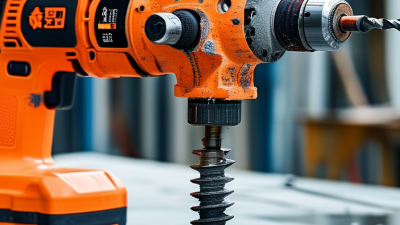
A pneumatic rotary hammer drill combines rotation with repeated impact. Its main components include an air inlet, control valve, cylinder, piston, impact anvil, rotary motor, chuck, and exhaust silencer. The chuck holds the bit, while seals guide moving parts inside the housing. Small design details matter. A worn seal can reduce power before the operator notices it.
Compressed air enters through the inlet and reaches a directional valve. The valve alternates pressure around the piston, driving it forward and pulling it back. Each forward stroke hits the anvil behind the bit. At the same time, a vane or gear motor converts airflow into spindle rotation. This dual action breaks hard material while the bit advances. The exhaust releases air through ports near the handle or nose. It often feels cold and sounds sharp.
The U.S. Department of Energy reports that compressed-air leaks can waste 20–30% of compressor output. Its industrial guidance also identifies compressed air as a significant electricity load, commonly around 10–15% in manufacturing facilities. These figures explain why hose condition, pressure settings, and leak checks affect real drilling performance.
Higher pressure is not always better. It may increase wear and noise. In practice, airflow stability matters more than a dramatic gauge reading. I still find air consumption difficult to judge by sound alone; a flow meter gives a more reliable answer.
What Is a Pneumatic Rotary Hammer Drill?
A pneumatic rotary hammer drill uses compressed air to drive a piston and strike the bit. Its rotary motion cuts while repeated impacts break masonry. The tool connects to an air compressor through a hose. That setup can deliver strong impact power with a relatively light body. On a concrete wall, the bit advances with sharp, regular blows instead of simple vibration.
The main difference from an electric rotary hammer is the power source. An electric model needs a socket or battery, while a pneumatic model needs a compressor with sufficient airflow. Pneumatic tools can run for long periods without overheating the motor. However, the hose limits movement, and the compressor adds noise, weight, and setup time. Air tools also need correct lubrication and clean air. Small maintenance mistakes matter.
A standard hammer drill works differently. It creates a lighter, rapid vibration behind the chuck. This suits brick, block, and occasional small holes in masonry. It usually remains more convenient for wood, metal, and general household work. A rotary hammer is better for dense concrete, deep anchors, and chiseling. Pneumatic impact can feel more controlled, but that depends on pressure, bit condition, and operator technique. More power is not always better. I have seen users press too hard and slow the bit. Let the hammer mechanism work. Check the compressor rating before drilling, because an underpowered air supply can make a powerful tool perform poorly.
Pneumatic rotary hammer drills use compressed air to generate high-impact force. Compared with electric rotary hammers and standard hammer drills, they are generally designed for heavier concrete work but require an air compressor and hose.
The chart compares representative mid-range values for each tool class. Pneumatic rotary hammers typically provide the greatest concrete drilling capacity, electric rotary hammers offer a balance of power and portability, while standard hammer drills are lighter and better suited to smaller holes and general-purpose work. Actual specifications vary by tool size, bit type, and operating conditions.
A pneumatic rotary hammer drill combines rotary motion with a rapid hammering action. Compressed air drives its internal piston, producing repeated impacts at the bit. It suits demanding work where electric power is unavailable or sparks must be minimized under controlled, lawful conditions.
Common applications include drilling anchor holes, breaking concrete edges, removing masonry, and preparing stone surfaces. The tool performs best in concrete, brick, block, and some natural stone. It is usually excessive for wood, thin sheet metal, or delicate tile. Choose carbide-tipped bits for masonry. Keep the bit aligned with the surface. Crooked pressure wastes energy and can damage the chuck.
Operating conditions matter more than many buyers expect. The U.S. Department of Energy reports that compressed-air systems may consume about 10% of industrial facility electricity. Air leaks can waste 20–30% of compressor output. Use a clean, dry air supply, correct hose diameter, and stable pressure within the tool’s manual limits. Lubrication also matters, although over-oiling can contaminate the work area. Poor maintenance is common.
Control vibration carefully. The UK Health and Safety Executive identifies 2.5 m/s² as the hand-arm vibration action value and 5 m/s² as the exposure limit. Actual exposure depends on tool design, material, bit condition, and operating time. I would not treat one drilling session as harmless. Short breaks help, but they are not a substitute for exposure assessment.
A pneumatic rotary hammer drill uses compressed air to drive a piston and rotate a bit. It suits concrete, masonry, and other hard materials. Its performance depends on air pressure, airflow, impact energy, and bit compatibility. A tool rated for 90 psi may lose power when a narrow hose or undersized compressor restricts airflow.
Safety requirements deserve close attention. The UK Health and Safety Executive identifies 2.5 m/s² A(8) as the hand-arm vibration exposure action value and 5 m/s² as the limit value. Operators should track trigger time, rotate tasks, and use vibration-reducing work methods. Hearing protection is also essential. OSHA’s construction noise standard sets a permissible exposure limit of 90 dBA over eight hours. Concrete drilling can approach or exceed that level, especially indoors. Dust control matters too. Wet methods or local extraction can reduce respirable crystalline silica, while a suitable respirator may still be necessary after exposure assessment.
Maintenance is practical, not ceremonial. Drain the compressor tank, inspect couplings, clean the air filter, and lubricate the air inlet as instructed. A dry tool can develop sluggish impacts and uneven rotation. Check the bit for cracks and excessive wear. Stop immediately if the housing becomes unusually hot.
Selection is often rushed. That is a mistake. Match the drill to the material, hole diameter, duty cycle, available airflow, and operator strength. A lighter tool may improve control, but it can sacrifice impact energy. I would also verify measured vibration and noise data, not rely only on catalog claims. Real sites are messier than test conditions. (Sources: HSE hand-arm vibration guidance; OSHA construction noise and silica standards.)
| Category | Data Dimension | Practical Guidance and Typical Values | Priority |
|---|---|---|---|
| Tool Basics | Operating Principle | A pneumatic rotary hammer uses compressed air to drive an internal piston that delivers repeated impacts to a bit while the spindle rotates. It is commonly used for drilling or light chiseling in concrete, masonry, and other hard materials. | Essential Knowledge |
| Tool Basics | Typical Air Pressure | Many industrial pneumatic tools are designed for approximately 6.2 bar (90 psi) at the tool inlet. Always follow the tool's specified operating pressure and verify pressure under flow, not only when the tool is idle. | Critical |
| Tool Basics | Air Consumption | Air demand varies by motor size, impact rate, and load. Confirm the tool's air-consumption rating, often expressed in cubic feet per minute (CFM) or litres per second (L/s), before sizing the compressor and air line. | Critical |
| Safety Requirements | Personal Protective Equipment | Use impact-rated eye protection, hearing protection, safety footwear, suitable work gloves, and a properly fitted respirator when dust-control measures do not keep airborne contaminants within applicable exposure limits. | Mandatory |
| Safety Requirements | Dust Control | Drilling masonry or concrete can generate respirable crystalline silica. Use wet methods or an effective dust-extraction system where suitable, avoid dry sweeping, and follow the applicable workplace exposure-control requirements. | Mandatory |
| Safety Requirements | Hose and Coupling Inspection | Inspect hoses, fittings, quick couplers, and whip checks before use. Remove damaged components from service. Never carry the tool by its hose or use a hose with cuts, severe abrasion, bulges, or exposed reinforcement. | Mandatory |
| Safety Requirements | Air Isolation | Shut off and isolate the air supply, then bleed trapped pressure before changing bits, clearing a jam, adjusting the tool, or performing maintenance. Do not disconnect a pressurized hose. | Mandatory |
| Safety Requirements | Bit Retention and Condition | Use only compatible shank sizes and approved bits. Check that the bit is fully retained and free from cracks, excessive wear, mushroomed ends, or distortion before starting work. | Mandatory |
| Safety Requirements | Reaction Force and Positioning | Maintain a balanced stance and a firm two-handed grip where the tool design requires it. Keep hands away from the bit and avoid awkward positions that could cause loss of control when the bit binds. | Mandatory |
| Maintenance | Air Filtration and Water Removal | Use a correctly sized filter and regulator. Drain the compressor receiver and air-line separators regularly to limit water and particles entering the motor and impact mechanism. | Recommended |
| Maintenance | Pneumatic Lubrication | Lubricate through the air inlet only with the lubricant specified for the tool. Excess oil can contaminate the work area, while insufficient lubrication can increase wear and heat. Follow the service interval in the manual. | Critical |
| Maintenance | Daily Cleaning | Wipe the housing, clean the bit holder, and remove dust from ventilation or exhaust areas without forcing debris into the mechanism. Do not use solvents that may damage seals or plastic components. | Recommended |
| Maintenance | Wear-Part Inspection | Inspect the chuck or bit holder, O-rings, seals, vanes, piston components, and bearings for wear according to the service schedule. Replace parts that no longer maintain proper retention, sealing, or performance. | Scheduled |
| Maintenance | Storage | Disconnect the air supply, clean and lightly lubricate the tool as specified, protect the air inlet from contamination, and store it in a dry location away from impact, moisture, and extreme temperatures. | Recommended |
| Tool Selection | Material and Application | Select a rotary hammer for drilling concrete or masonry and choose a chiseling function only when the tool is designed for impact-only operation. Match the tool to the required hole size, depth, and duty cycle. | Critical |
| Tool Selection | Impact Energy and Impact Rate | Higher impact energy can improve performance in harder materials, while impact rate affects drilling speed and control. Compare published values using the same measurement method and avoid selecting solely by maximum impact rate. | Important |
| Tool Selection | Maximum Drilling Capacity | Check the stated maximum diameter for concrete and masonry, then select a tool with an appropriate operating range rather than using the maximum capacity continuously. Large holes generally require greater air supply and impact capability. | Critical |
| Tool Selection | Ergonomics and Vibration | Consider tool mass, grip design, balance, trigger control, and declared vibration emission. For frequent use, select a model and work process that reduce exposure duration and allow suitable breaks and job rotation. | Critical |
| Tool Selection | Noise Level | Review the declared sound-pressure and sound-power values where available. Pneumatic impact tools can produce hazardous noise, so hearing protection and a noise-control assessment may be necessary. | Critical |
| Tool Selection | Compressor Compatibility | The compressor must provide the required CFM or L/s continuously at the specified pressure. Include pressure loss from hose length, couplers, filters, and regulators when assessing the complete air system. | Critical |
| Tool Selection | Hose and Fitting Size | Use the hose inside diameter and coupling type recommended for the tool. An undersized or excessively long hose can restrict airflow, reduce impact performance, and cause pressure to fall below the required operating level. | Important |
| Tool Selection | Operating Environment | For wet, dusty, elevated, confined, or potentially explosive environments, verify that the tool, air system, electrical accessories, and work procedures are suitable for the specific conditions. | Condition Dependent |
| Verification | Pre-Use Functional Test | After connecting the tool safely, run it briefly without load while pointing it away from people. Stop immediately if there is abnormal noise, excessive vibration, air leakage, uncontrolled speed, or poor bit retention. | Mandatory |
| Verification | Documentation and Training | Keep the manufacturer's operating and maintenance instructions available. Operators should be trained in air-system isolation, dust and noise controls, bit installation, inspection, and emergency procedures. | Mandatory |