Leave Your Message

How to Choose a Pneumatic Rotary Hammer Drill?

Choosing a Pneumatic Rotary Hammer Drill is not simply a question of impact force. On a busy concrete site, hose length, coupler size, moisture, and operator grip affect performance. A drill may feel powerful at the bench, then stall under load. The U.S. Department of Energy’s Improving Compressed Air System Performance sourcebook reports that leaks can waste 20% to 30% of compressor output. That figure makes air demand a purchasing issue. Buyers should compare operating pressure, air consumption, impact rate, and compressor capacity together.

Safety data deserves equal attention. The UK Health and Safety Executive’s L140 guidance identifies 2.5 m/s² A(8) as the hand-arm vibration action value and 5 m/s² as the exposure limit value. These figures do not make a tool automatically safe. They help employers plan exposure, rotation, maintenance, and suitable controls. ISO 28927-5 also provides a recognized method for measuring vibration from rock drills and impact drills. Request measured values, not vague claims such as “low vibration.” Noise, dust, trigger control, and exhaust direction also matter during long shifts.

There is no universally best model. A contractor breaking reinforced concrete needs different performance from a maintenance team drilling masonry. This guide examines shank compatibility, impact energy, air consumption, vibration, durability, and service support. Field inspection often reveals overlooked problems: clogged filters, undersized hoses, or worn couplings. Honestly, specifications alone can mislead. The right choice comes from matching tested data with the actual job, compressor, operator, and maintenance routine. A smaller drill may win when control matters more than brute force. That is worth reconsidering.
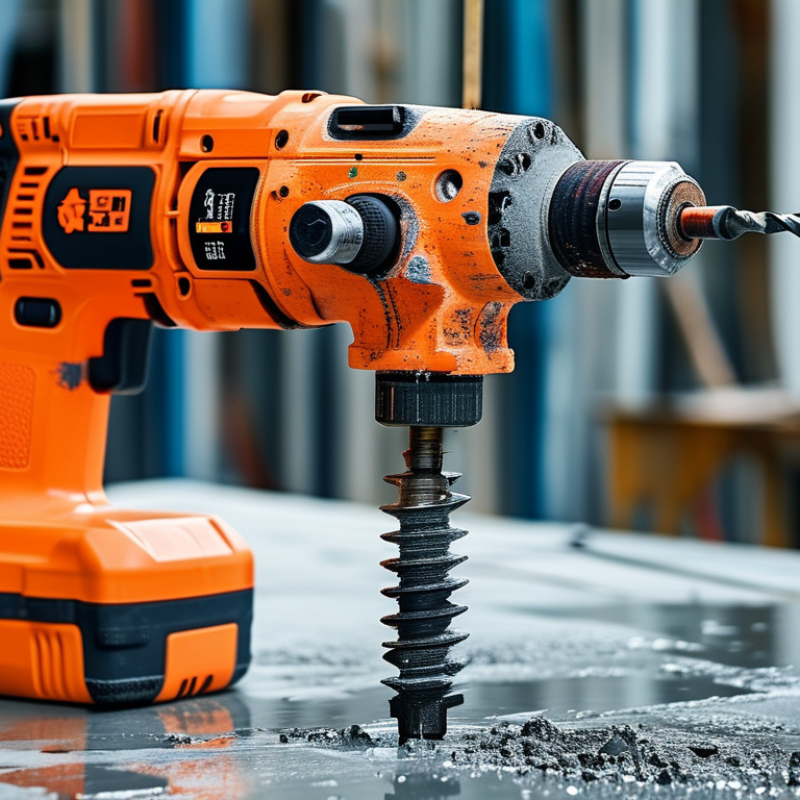
How to Choose a Pneumatic Rotary Hammer Drill?

Define the Work Requirements and Drilling Conditions

Choosing a pneumatic rotary hammer drill starts with the work, not the tool catalogue. Identify the material, hole diameter, drilling depth, and daily workload. Concrete, brick, and dense stone demand different impact energy and bit designs. A six-millimeter anchor hole is not the same task as a forty-millimeter service opening. Measure carefully.

Check the air supply before choosing a drill. Confirm the compressor’s working pressure, airflow, hose length, and coupler size. Long, narrow hoses can reduce performance at the drilling face. In dusty areas, use suitable dust extraction and clean the air line regularly. Moisture in the system may also damage internal components. Small details matter.

Consider the operator’s position and the site conditions. Overhead drilling increases fatigue, while confined spaces may require a shorter body and angled connection. Match the drill’s chuck system with available bits, and verify the required shank size. I once focused on impact power and ignored vibration; that decision made a full shift unnecessarily tiring. The larger tool was not better. Check noise limits, hand protection, and maintenance access before work begins. If the compressor struggles during continuous drilling, reduce the duty cycle or select a lower-demand model. A practical trial on the actual material can reveal problems that specifications miss.
Compare Hammer Types, Power Ratings, and Rotation Speeds

How to Choose a Pneumatic Rotary Hammer Drill?

Choosing a pneumatic rotary hammer drill starts with the hammer type. A hammer-drill setting suits brick, tile, and light masonry work. A rotary hammer delivers stronger piston impacts for concrete and deeper holes. Some models also include rotary-only operation for metal or wood drilling. In my workshop, I once selected a compact tool because it felt easier to control. That assumption was wrong on dense concrete. The bit overheated, and progress became painfully slow.

Power ratings need careful reading. Pneumatic tools depend on air pressure and airflow, not electrical wattage. Check the required pressure, measured in bar or psi, and the air consumption, usually listed in CFM or liters per minute. Your compressor must maintain that airflow while the tool is working. Otherwise, impact force fades during drilling. Impact energy, measured in joules, provides a clearer comparison between heavy-duty tools. Still, higher energy can cause more vibration and faster operator fatigue. More power is not always better.

Rotation speed affects bit control and hole quality. Lower speeds help with large bits and hard materials. Higher speeds can suit smaller bits and softer masonry. Variable speed gives better control near tile edges or existing cracks. Use the correct bit type and inspect the chuck regularly. A loose bit can reduce drilling accuracy and damage the tool. My practical preference is moderate speed with steady pressure, although experienced operators may choose differently. Manufacturer testing matters, but real jobsite conditions can expose weaknesses that specifications overlook.

Select the Right Bit System, Size Range, and Air Supply

How to Choose a Pneumatic Rotary Hammer Drill?

Select the bit system before comparing drill bodies. A retained shank must match the chuck mechanism and impact energy. Splined, hexagonal, and round systems behave differently under heavy loading. Fit matters. A loose shank wastes impact force and quickly marks the holder. For concrete anchors, choose carbide-tipped bits with clear flute geometry. For breaking work, use pointed or flat chisels. Check the manufacturer’s dimensional chart, not a seller’s photograph.

Size range should reflect the holes you actually drill. A compact tool suits roughly 12–20 mm holes and lighter overhead work. Medium models often cover 20–32 mm applications. Larger holes need greater impact energy and steadier handling. These ranges are practical guides, not universal rules. I would rather select a narrower, efficient range than buy oversized capacity that rarely gets used.

Air supply is the overlooked constraint. The U.S. Department of Energy’s Improving Compressed Air System Performance sourcebook reports that leaks can waste 20–30% of compressor output. Measure free air delivery at the tool, around its rated pressure, rather than trusting tank pressure alone. The Compressed Air and Gas Institute also emphasizes pressure regulation, filtration, and hose sizing in its industry handbook. A long, narrow hose can starve the hammer. Air is unforgiving. Leave capacity for simultaneous tools, but avoid excessive pressure. That choice feels safer, yet it may increase wear and vibration. A field test with the intended bit, hose, and compressor remains the most reliable check.

How to Choose a Pneumatic Rotary Hammer Drill? - Select the Right Bit System, Size Range, and Air Supply

Work Category Recommended Bit System Typical Bit Diameter Range Suitable Materials Typical Air Pressure Typical Air Consumption Minimum Compressor Output* Recommended Hose ID Selection Notes
Light-duty anchor holes SDS-plus compatible shank, where supported 5–20 mm (3/16–3/4 in) Brick, block, concrete, masonry 6.2–7 bar (90–100 psi) 4–8 CFM (113–227 L/min) 6–10 CFM at rated pressure 3/8 in (10 mm) minimum Choose a compact tool with low vibration and a throttle that allows precise starting.
General construction drilling SDS-max compatible shank or equivalent heavy-duty system 12–40 mm (1/2–1 9/16 in) Reinforced concrete, concrete block, stone 6.2–7 bar (90–100 psi) 8–15 CFM (227–425 L/min) 12–18 CFM at rated pressure 1/2 in (13 mm) minimum Use a larger bit system when drilling deeper holes or working in dense concrete.
Heavy-duty drilling and breaking Large hex shank, integral drill steel, or heavy-duty taper system 25–50 mm (1–2 in) Hard concrete, rock, foundations, roadwork 6.2–7 bar (90–100 psi) 15–25 CFM (425–708 L/min) 20–30 CFM at rated pressure 1/2–3/4 in (13–19 mm) Prioritize impact power, cooling, side handles, and a robust retainer for continuous work.
Deep-hole rock drilling Integral drill steel, taper socket, or threaded rod system 25–60 mm (1–2 3/8 in) Natural rock, quarry stone, hard aggregate 6.2–7 bar (90–100 psi) 20–35 CFM (566–991 L/min) 28–42 CFM at rated pressure 3/4 in (19 mm) preferred Match the bit connection to the tool before purchase; flushing requirements can significantly increase air demand.
Chiseling and surface scaling Hex or round chisel shank compatible with the retainer Chisel size is tool-dependent; common shanks are 17–25 mm Concrete, mortar, brick, asphalt, scale buildup 6.2–7 bar (90–100 psi) 8–25 CFM (227–708 L/min) 12–30 CFM at rated pressure 1/2–3/4 in (13–19 mm) Confirm the shank length, retainer style, and tool orientation before selecting chisels.
Continuous production work Bit system specified for the tool's duty cycle and retention method Use the manufacturer's rated range; avoid oversizing Concrete, rock, masonry, industrial castings Maintain 6.2–7 bar at the tool inlet Tool-specific; often 15–35 CFM Rated consumption plus 20–25% reserve Use the largest practical hose to limit pressure drop Select an air-line lubricator or follow the tool's lubrication instructions, and provide filtration and moisture control.

*Air-consumption and compressor figures are typical selection ranges for pneumatic rotary hammer applications. Actual requirements vary with impact rate, bit diameter, drilling depth, duty cycle, hose length, couplers, altitude, and the specific tool design. Choose a compressor based on delivered air at the required pressure, not tank size alone.

Evaluate Ergonomics, Durability, Safety, and Maintenance

When choosing a pneumatic rotary hammer drill, start with ergonomics, not maximum impact energy. Hold the tool with both hands and check whether the trigger stays natural under pressure. A short, balanced body reduces wrist twisting during overhead drilling. Fit matters. Gloves should not force excessive grip strength.

Vibration deserves careful attention. EU Directive 2002/44/EC sets an action value of 2.5 m/s² A(8) and a limit value of 5 m/s² A(8) for hand-arm vibration exposure. Compare the drill’s declared vibration data with your real drilling schedule. The figure may change with worn bits, hard concrete, or poor posture. I would not trust one catalog number alone. HSE guidance also recommends selecting lower-vibration equipment and rotating tasks where practical.

Durability depends on more than a metal housing. Inspect the chuck, seals, exhaust path, and hose coupling before purchase. ISO 28927-5 provides vibration test methods for rock drills, helping buyers compare measured performance. For safety, confirm the tool has a secure retainer and controlled exhaust direction. OSHA 29 CFR 1910.242(b) limits compressed-air cleaning pressure to 30 psi when guarding is absent. Maintenance is evidence. Drain the airline, lubricate according to the service manual, and replace damaged hoses promptly. Record unusual noise, heat, or impact loss. Small warning signs are easy to dismiss. That is where my own judgment has failed before.

Match the Drill to Your Budget and Intended Applications

How to Choose a Pneumatic Rotary Hammer Drill?

Match the Drill to Your Budget and Intended Applications

A pneumatic rotary hammer drill should match both your work and your air compressor. Check the required pressure and airflow before comparing tool prices. A low-cost drill is not truly affordable if your compressor cannot maintain its operating demand. That mistake is common.

For occasional brick anchors, a compact model may provide enough impact energy and easier handling. Concrete, stone, and repeated drilling require stronger impact performance, durable seals, and a suitable chuck system. Always check the recommended bit diameter range.

Your budget should include hoses, fittings, lubricating oil, bits, hearing protection, and possible compressor upgrades. These extras can change the final cost considerably. For a small renovation, renting a complete pneumatic setup may be more practical than buying every component.

In a busy workshop, a heavier tool may reduce downtime, but it can also increase user fatigue. More power is not automatically better. That assumption deserves checking.

Consider the drilling position as well. Overhead work favors a lighter body and controlled vibration. Floor drilling allows more weight, provided the operator can maintain stable pressure.

Inspect the trigger, handle shape, exhaust direction, and service access before purchase. Ask for tested airflow data, not only advertised impact force.

A supplier with clear technical documentation is easier to trust. I would also leave room for doubt: published figures may reflect ideal conditions, while worn hoses or moisture can reduce real performance.