Leave Your Message
China’s FIBC manufacturing sector serves global agriculture, chemicals, food, minerals, and construction supply chains. As demand grows for efficient bulk packaging, machinery quality becomes increasingly important. Industry studies, including Smithers’ The Future of Flexible Packaging to 2028, identify flexible packaging as a continuing growth area. Grand View Research also reports expanding demand for flexible intermediate bulk containers across industrial applications.
A reliable Fibc Belt Cutting Machine must deliver accurate lengths, clean edges, stable tension, and repeatable output. These details affect bag strength, production waste, and operator safety. ISO 21898:2024 provides relevant guidance for flexible intermediate bulk containers, especially regarding design, testing, and safe handling. However, this standard does not rank machine manufacturers. Buyers must examine technical evidence directly.
This guide reviews ten notable Chinese manufacturers and their practical capabilities. The comparison considers cutting accuracy, automation, blade design, production speed, after-sales support, customization, and export experience. Factory audits, sample testing, spare-parts availability, and documented quality procedures deserve close attention. A polished website proves little.
Public market data remains incomplete. Some companies disclose limited production figures, while others emphasize trading networks. Therefore, this list should support supplier screening, not replace independent verification. Shortlist carefully. Ask for test videos, machine drawings, warranty terms, and references from comparable FIBC plants. Even small inconsistencies in belt width or cut length can create visible defects during bag assembly. This review may not capture every strong regional manufacturer, and that limitation deserves honest consideration.
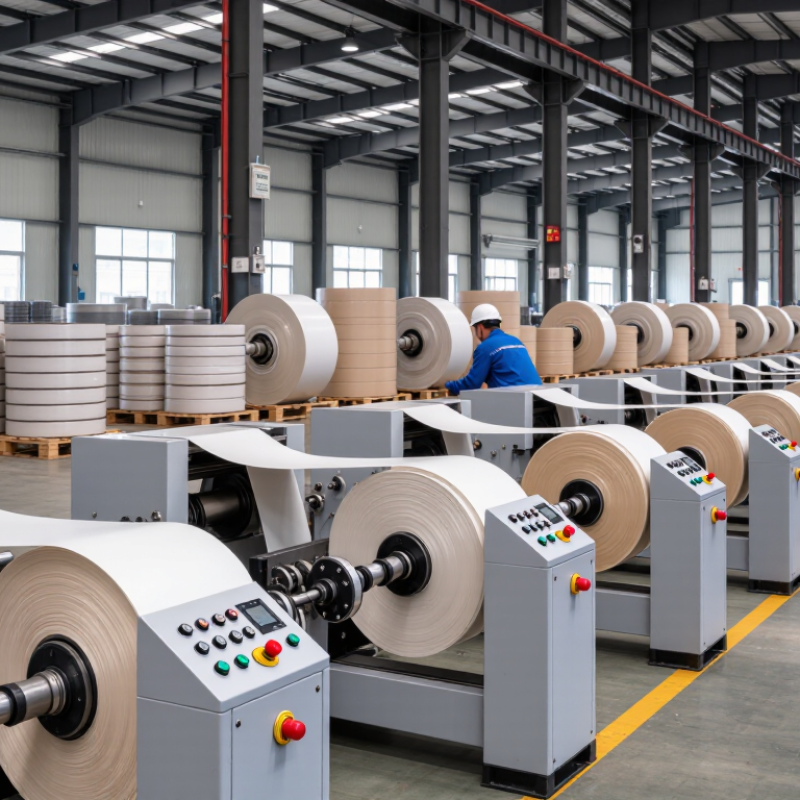
FIBC Belt Cutting Machines: Definition, Functions, and Applications
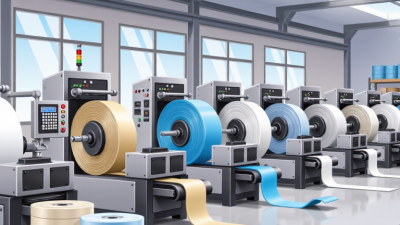
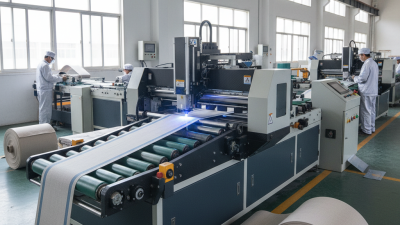
An FIBC belt cutting machine cuts woven polypropylene webbing into consistent lengths. It commonly uses a heated blade, ultrasonic knife, or cold cutting system. The machine can measure, cut, stack, and sometimes seal belt ends. This helps reduce fraying, manual errors, and material waste during bulk bag production. Common components include a servo motor, length controller, cutting blade, and adjustable feeding rollers.
Applications include lifting loops, corner belts, discharge straps, and handle systems for flexible intermediate bulk containers. The machine also supports bags used for chemicals, minerals, grains, construction materials, and agricultural products. Grand View Research estimated the global FIBC market at about USD 5.7 billion in 2023, with continued growth expected through 2030. That expansion increases demand for stable belt dimensions and repeatable production. However, production speed alone is not enough. Poor heat control can weaken polypropylene webbing. This is often overlooked.
Tips: Match the cutter with belt width, thickness, and material. Test at least three belt samples before full production. Check cut length with a calibrated ruler, not visual judgment. Keep blades clean. Small errors become expensive during large orders.
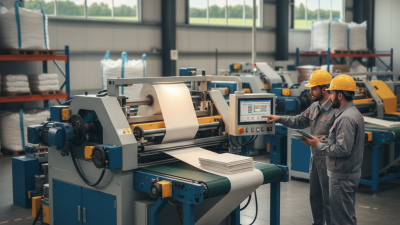
Manufacturers should also review operator safety, energy use, maintenance access, and spare-part availability. A reliable machine needs practical controls, not impressive specifications alone. In real workshops, dust and uneven belt rolls can affect accuracy. The best selection is sometimes less advanced, but easier to inspect and adjust.
FIBC belt cutting machines are automated systems designed to measure and cut woven polypropylene or polyethylene webbing into precise lengths for flexible intermediate bulk containers. The following table presents ten representative machine capability profiles commonly used for FIBC belt, lifting-loop, and industrial webbing production, without identifying any company or brand.
| No. | Machine Capability Profile | Primary Cutting Method | Compatible Belt Width | Typical Cutting Length | Typical Production Speed | Length Accuracy | Temperature Control | Suitable Materials | Typical Applications |
|---|---|---|---|---|---|---|---|---|---|
| 1 | Standard Hot-Knife Belt Cutter | Heated blade with edge sealing | 25–100 mm | 100–9,999 mm | 30–60 cuts/min | ±1 mm | 100–400°C | PP, PE, polyester webbing | FIBC lifting loops, corner straps, and basic tie belts |
| 2 | Servo-Driven Precision Cutter | Servo feeding and hot-knife cutting | 20–120 mm | 50–20,000 mm | 40–80 cuts/min | ±0.5 mm | 100–450°C | Woven PP, PE, polyester | High-volume FIBC loop production requiring consistent lengths |
| 3 | Ultrasonic Webbing Cutter | Ultrasonic vibration and localized sealing | 10–80 mm | 50–5,000 mm | 40–100 cuts/min | ±0.5–1 mm | No external heating required | PP, polyester, laminated webbing | Clean-edge straps, narrow belts, and heat-sensitive constructions |
| 4 | Dual-Lane Belt Cutting System | Two synchronized hot-knife lanes | 25–75 mm per lane | 100–8,000 mm | 60–120 cuts/min | ±1 mm | 100–400°C | PP and PE woven webbing | Parallel production of matched FIBC lifting straps |
| 5 | Heavy-Duty Reinforced Webbing Cutter | High-power hot knife or guillotine blade | 50–150 mm | 200–15,000 mm | 20–50 cuts/min | ±1–2 mm | 120–450°C when heated cutting is used | Thick PP, polyester, coated webbing | Heavy-load lifting loops and reinforced container straps |
| 6 | Automatic Measuring and Cutting Line | Encoder-controlled feeding and thermal cutting | 25–100 mm | 100–30,000 mm | 30–70 cuts/min | ±1 mm | 100–450°C | PP, PE, polyester webbing | Continuous production with automatic length counting and batching |
| 7 | Multi-Recipe Programmable Cutter | PLC-controlled servo feed and hot cutting | 20–120 mm | 50–50,000 mm | 30–80 cuts/min | ±0.5–1 mm | 100–450°C | PP, PE, polyester, coated tapes | Mixed-order production with multiple belt lengths and recipes |
| 8 | Cold-Cut Webbing Machine | Mechanical blade cutting | 10–100 mm | 50–10,000 mm | 30–90 cuts/min | ±1–2 mm | Ambient temperature | Non-melting textiles and selected woven tapes | Applications where sealed edges are not required |
| 9 | Hot and Cold Combination Cutter | Selectable thermal or mechanical cutting | 15–120 mm | 50–20,000 mm | 30–80 cuts/min | ±1 mm | 100–400°C in hot-cut mode | PP, PE, polyester, cotton-blend webbing | Flexible production for different belt materials and edge requirements |
| 10 | Integrated Cutting and Counting System | Servo feeding, hot cutting, and automatic counting | 25–100 mm | 100–30,000 mm | 40–100 cuts/min | ±0.5–1 mm | 100–450°C | PP, PE, polyester webbing | FIBC assembly lines requiring counted bundles and repeatable output |
Technical ranges are representative industry values. Actual performance depends on belt construction, material thickness, cutting length, feeding method, machine configuration, operator settings, and required edge-sealing quality.