Leave Your Message

China Top 10 Conveyor Belt Cutting Tool Suppliers

A conveyor belt may travel for miles each day, yet one uneven cut can complicate a splice and delay production. Choosing a Conveyor Belt Cutting Tool is therefore a practical maintenance decision, not a minor purchasing detail. Blade stability, cutting depth, operator control, and belt material all matter. So does the worksite: a tool used on a thick rubber belt may not suit a lightweight PVC line.

Industry data shows why conveyor reliability deserves attention. Grand View Research estimated the global conveyor belt market at approximately USD 6.24 billion in 2023, with continued growth projected through 2030. That figure covers conveyor belts, not cutting tools specifically. Still, it signals a large installed base requiring inspection, repair, and careful belt preparation. Numbers need context.

Conveyor engineer R. Todd Swinderman’s published maintenance guidance emphasizes that reliable performance depends on understanding the whole conveyor system, not choosing equipment in isolation. Applied to belt cutting, that means considering belt construction, splice requirements, safety features, and repeatability together. A sharp blade helps. A secure work surface matters too. This guide compares ten suppliers in China by product range, application fit, and practical buying considerations. Supplier claims should be checked against samples, technical documents, and real operating conditions. No catalog can replace a trial on the belt you actually use.
China Top 10 Conveyor Belt Cutting Tool Suppliers

Conveyor Belt Cutting Tools: Types, Uses, and ISO 14890

Conveyor Belt Cutting Tools: Types, Uses, and ISO 14890

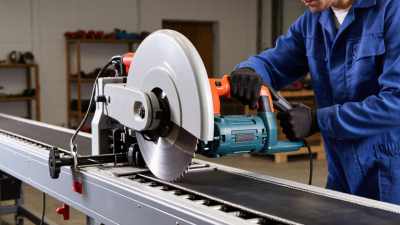
Choosing a conveyor belt cutting tool depends on belt thickness, reinforcement, and the cut required. A utility knife suits small trimming jobs, while a hook blade can help cut belt covers with less risk of reaching beneath the surface. For long, straight cuts, a guided manual belt cutter keeps the blade aligned across the belt. Powered rotary or shear cutters can save time on thicker material, but operators still need firm support and controlled feed.

Small details matter. A dull blade may pull rubber or leave a ragged edge.

ISO 14890

ISO 14890 specifies requirements for rubber- or plastics-covered, textile-construction conveyor belts intended for general surface use. It is a belt specification, not a certification standard for cutting tools. When preparing a belt for installation or repair, check the product documentation and the relevant ISO edition for the belt’s construction and intended service.

A square cut helps with accurate joining, but it does not guarantee a sound splice; alignment and preparation matter too. In real workshops, a guide can still drift on a dusty or uneven surface. Stop, clean the work area, and check the cut against a straightedge before proceeding.
How ISO 15236 Steel-Cord Belts Affect Cutter Selection

ISO 15236 specifies requirements for steel-cord conveyor belts, but it does not prescribe a cutting tool. That matters. The standard helps identify belt construction; the cutter must match the actual belt and task. Steel cords resist ordinary blades and can damage unsuitable tools. Not just rubber.

Before selecting a cutter, check cover thickness, cord diameter, cord spacing, and whether the cut runs across or along the belt. A hand-held knife may trim a thin rubber cover, but it is not a reliable choice for cutting through steel cords. For transverse cuts, use equipment designed for reinforced belts, with enough cutting force and a blade suited to the cord layout. Longitudinal slitting may call for a different setup. Cord pitch matters.

Look for stable clamping, guarded moving parts, and a way to keep the belt from shifting during the cut. Keep the blade aligned; a wandering cut can expose or damage neighboring cords and complicate splicing. Dust and small rubber fragments also need attention in the work area. I would still verify the belt data sheet and test the setup on a suitable offcut. The ISO designation alone cannot tell you how a worn or repaired belt will behave.

China’s Top 10 Suppliers Compared by Tool Type and Specifications

China’s top ten conveyor belt cutting tool suppliers are best compared by tool type, cutting capacity, and documented specifications—not by headline claims alone. Manual cutters suit short repair jobs and thinner belts. Electric oscillating knives can handle repetitive work, while rotary cutters may provide cleaner, steady cuts on suitable materials. Not interchangeable.

Check blade length, thickness, replacement availability, and the belt thickness each tool is designed to cut. For powered models, compare motor rating, operating speed, and cutting depth. A tool that performs well on rubber may behave differently on reinforced belt, so ask suppliers which belt construction they tested. Request a sample cut or a test report where practical.

Specification sheets reveal only part of the picture. Ask about blade wear, spare-part lead times, handle comfort, and how the tool performs during extended use. A neat edge matters; so does predictable control near embedded reinforcement. On paper, the strongest specification can still disappoint. I would compare actual cut samples before choosing, though sample conditions may not match a busy workshop. Clear technical answers and consistent documentation make supplier comparisons more useful than a low price alone.

China Top 10 Conveyor Belt Cutting Tool Suppliers - China’s Top 10 Suppliers Compared by Tool Type and Specifications

Supplier Slot Tool Type Cutting Method Representative Specifications Typical Belt Application Selection Consideration
Supplier 1 (anonymous) Snap-off utility knife Manual, segmented blade Common blade format: 18 mm; blade segments are snapped off to expose a fresh edge. Light trimming of rubber, PVC, and fabric-reinforced belt covers. Check handle locking strength and blade-retention design; not intended for steel-cord cutting.
Supplier 2 (anonymous) Hook-blade knife Manual, hooked replaceable blade Uses replaceable hook-style blades; blade dimensions and handle compatibility vary by model. Surface slitting and trimming of flexible rubber or textile-reinforced belting. Confirm blade availability and whether the hook geometry suits the belt thickness.
Supplier 3 (anonymous) Heavy-duty fixed-blade knife Manual, replaceable straight blade Common heavy-duty utility blade format: 25 mm; usable cutting depth depends on the handle and blade extension. Workshop trimming of thicker rubber and multi-ply belting. Use controlled blade exposure and suitable guarding; verify the rated belt thickness.
Supplier 4 (anonymous) Manual belt slitter Guided longitudinal cut Adjustable cutting position; maximum belt thickness and cut width are model-specific. Slitting wide belts into narrower strips or trimming belt edges. Check guide stability, width-adjustment range, and compatibility with belt covers or cleats.
Supplier 5 (anonymous) Rotary belt cutter Rotating circular blade Blade diameter, cutting depth, and supported belt width depend on the cutter model. Straight cuts in rubber, PVC, and textile-reinforced conveyor belts. Compare blade replacement cost, guarding, and the manufacturer's stated material limits.
Supplier 6 (anonymous) Electric belt cutter Motor-driven blade Power supply, blade speed, and maximum cutting thickness vary by model and market. Repeated or longer cuts in rubber and reinforced belting, subject to rated capacity. Verify voltage, duty cycle, safety features, and the rated material/thickness range.
Supplier 7 (anonymous) Pneumatic belt cutter Air-powered blade or cutting head Required air pressure, air consumption, and cutting capacity are model-specific. Industrial cutting tasks where a compatible compressed-air supply is available. Match the tool to the site's air supply and confirm hose, regulator, and guarding requirements.
Supplier 8 (anonymous) Hot knife Heated blade Temperature control and blade shape vary; compatible materials must be specified by the tool maker. Selected thermoplastic belts and synthetic materials that can be cut with heat. Confirm material compatibility, ventilation needs, and temperature-control range before use.
Supplier 9 (anonymous) Oscillating-knife cutter Rapid reciprocating blade motion Stroke, speed, blade options, and cutting depth depend on the machine configuration. Profile cutting of flexible belt materials and selected reinforced textiles. Check sample-cut quality and confirm that the tool is rated for the belt's reinforcement.
Supplier 10 (anonymous) Steel-cord belt cutting tool Purpose-built mechanical or powered cutting system Rated cord diameter, belt thickness, and cutting capacity must be confirmed for each model. Steel-cord conveyor belts and other belts with metallic reinforcement. Do not substitute a general-purpose knife; verify the cord specification and required safety procedure.

Note: Supplier slots are anonymized placeholders, not named or ranked companies. Specifications describe common tool formats and selection factors; actual capacities vary by model and should be verified against the manufacturer's current datasheet.

Safety and Risk Assessment: Applying ISO 12100:2010 to Belt Cutting

Applying ISO 12100:2010 to belt cutting starts with the task, not just the tool. Map each step: positioning the belt, tensioning it, cutting, and clearing offcuts. Identify blade contact, pinch points, unexpected belt movement, and awkward reaches. ISO 12100 calls for reducing risk through design, safeguards, and clear information. A warning label alone is not enough.

The U.S. Bureau of Labor Statistics reported a 2.8 total recordable injury and illness rate per 100 full-time workers in manufacturing in 2023. This figure is not specific to belt cutting, but it underlines why task-level controls matter. Use a stable work surface, secure the belt, and keep hands outside the blade path. Assess whether the cutter can be guarded without obstructing the cut. Recheck risks when belt width, material, or work location changes; this step is easy to rush.

Tips: Isolate energy before adjustments. Use a purpose-designed cutter and inspect its blade and handle before each shift. Keep the work area clear, and train operators on the actual cutting sequence. Record near misses, too. They may reveal a weak control before an injury occurs.

How to Match Blade Depth and Cutting Width to Belt Specifications

China Top 10 Conveyor Belt Cutting Tool Suppliers

How to Match Blade Depth and Cutting Width to Belt Specifications

Blade depth should follow measured belt thickness, not nominal width. ISO 14890:2013 sets requirements for rubber- or plastics-covered general-purpose conveyor belts, but gives no universal knife setting. CEMA’s Belt Conveyors for Bulk Materials, 7th edition, lists common nominal widths, including 36, 48, and 60 inches. Use these figures to assess tool capacity, then verify the actual belt. A neat calculation can still miss a lumpy splice.

Measure thickness at several points with a caliper, including covers and worn areas. Set blade exposure just beyond the thickest reading, then test on a secured offcut over a sacrificial board. Too little depth may leave fabric plies attached; too much can score the surface or pull the cut off line. For a full-width crosscut, choose a tool with usable cutting width greater than the measured belt width. Leave a small allowance for edge cleanup. Belts vary more than expected.

Tips: Measure twice. Check the splice area, too. Confirm the tool maker’s depth limits before cutting.