Leave Your Message

7 Best Belt Strap Cutting Machines for Global Buyers

Choosing the right Belt Strap Cutting Machine can shape daily output, product consistency, and long-term operating costs. Global buyers often compare speed, cutting accuracy, material range, and after-sales support before placing an order. A machine that performs well on polyester webbing may struggle with thick leather or coated straps. That difference matters.

This guide reviews seven widely considered machines for international purchasing decisions. The comparison focuses on practical details, including blade adjustment, feeding stability, servo control, safety protection, and maintenance access. Some models suit small workshops producing belts and luggage straps. Others fit larger factories handling continuous rolls and higher volumes. Look closely at cutting width, temperature control, waste levels, and compatibility with local power requirements.

Real experience often reveals what brochures omit. A sharp blade may still produce uneven edges when the material shifts during feeding. A fast machine may create unnecessary waste if calibration is difficult. Buyers should request sample cuts, factory videos, technical drawings, and clear warranty terms. Supplier communication also deserves attention, especially when spare parts must cross borders. Confirm certifications and installation support for your destination market.

No machine fits every workshop. That is the honest part. Budget, material thickness, daily production, and operator skill can change the final ranking. This overview offers a practical starting point, not a substitute for testing. Careful comparison can reduce costly surprises and support a more confident global purchase.
7 Best Belt Strap Cutting Machines for Global Buyers

What Belt Strap Cutting Machines Do and Who Needs Them

Belt strap cutting machines measure, feed, and cut continuous materials into repeatable lengths. They process leather, webbing, synthetic strap, and coated textiles. A typical setup combines a roller feeder, length encoder, blade, and collection table. Operators can program 500-millimeter pieces, then adjust for stitching allowances or buckle placement.

Grand View Research estimates the global leather goods market reached about USD 242.8 billion in 2023. This scale creates pressure for faster, more consistent preparation. The machines serve belt makers, luggage workshops, safety-equipment producers, furniture suppliers, and automotive interior manufacturers. Small factories may need compact semi-automatic models. High-volume plants usually require servo feeding, automatic stacking, and waste monitoring. Different buyers need different machines.

The International Labour Organization reports that manufacturing remains a major source of global employment, making safer machine design important. Guarded blades, emergency stops, and clear operator training should be standard. In practical production, cutting accuracy is only one concern. Material stretch, edge curling, and dusty surfaces can disturb feeding. A machine may promise high speed, yet poorly aligned rollers create uneven lengths. That part is often underestimated. Buyers should test their actual strap materials before purchase and record cut tolerance, cycle time, noise, and waste. Even experienced teams sometimes choose capacity too quickly. A slower, stable machine can be the better investment.
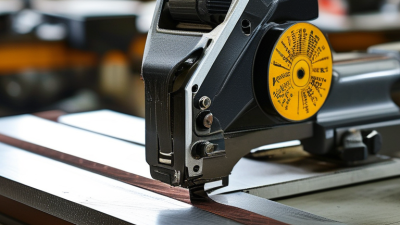
Key Features for Comparing Machines in Global Markets

Choosing among the 7 best belt strap cutting machines requires more than comparing blade speed. Global buyers should examine cutting width, material compatibility, feed accuracy, and maintenance access. A machine handling leather, nylon, and polypropylene needs adjustable tension control. Otherwise, edges may curl or stretch during production.

Automation also deserves careful attention. The International Federation of Robotics reported 541,302 industrial robot installations worldwide in 2023. This signals stronger demand for programmable feeding, sensors, and production data. For strap cutting, buyers should check servo accuracy, batch counting, emergency-stop design, and software language options. Grand View Research’s 2024 textile machinery analysis also forecasts steady market growth through 2030, making lifecycle cost more important than the purchase price. Energy use, replacement blades, training, and local technical support can change the real investment. Some suppliers publish impressive speed figures, but those figures may exclude setup time and material waste.

Tips: Request a video test using your actual strap material. Measure ten cuts and record the average deviation. Ask for voltage compatibility, conformity documents, spare-part lead times, and operator training. A lower-cost machine may appear efficient, yet inconsistent feeding can create expensive rejects. My practical concern is simple: advertised precision is not always factory-floor precision. Test before deciding.

Seven Top Belt Strap Cutting Machines and Their Best Applications

Choosing among seven top belt strap cutting machines depends on material, volume, edge quality, and acceptable waste. A manual hot-knife cutter suits polyester webbing, sealing the edge while preventing unraveling. A cold-knife cutter works better with cotton, leather, and heat-sensitive materials. An ultrasonic cutter handles synthetic straps cleanly, producing a narrow sealed edge with limited smoke. It is useful for luggage straps and safety harness components.

A rotary blade machine fits continuous rolls and fast, straight production runs. A laser cutter serves detailed patterns, short batches, and customized strap shapes, but operators must control heat and ventilation. A CNC automatic cutter offers accurate lengths for large orders, especially when every strap needs repeated measurements. A die-cutting press is effective for layered materials and identical pieces, such as shaped belt tabs or reinforcement pads. Test samples matter. I have seen a seemingly perfect setting leave melted edges after longer production. Measure cut length, edge strength, surface marks, and material loss before purchasing. Feeding tension also deserves attention; loose webbing can create uneven ends. The fastest machine is not always the most reliable choice. Sometimes, a slower cutter gives better consistency and fewer rejected pieces.

How to Select a Machine for Materials, Output, and Budget

Choosing among the 7 best belt strap cutting machines starts with the material, not the price. Polyester webbing, nylon, leather, and coated belts react differently to heat, pressure, and blade speed. A hot knife can seal synthetic edges neatly, while leather usually needs a cold, sharp cutting system. Textile Exchange’s Materials Market Report 2024 recorded global fiber production at about 124 million tonnes in 2023, showing the scale of material demand. Yet larger capacity is not always better for a small workshop.

Match the machine to daily output. Check cutting length accuracy, feeding stability, web width, blade replacement time, and waste per roll. For continuous production, servo feeding and automatic stacking can reduce operator fatigue. The International Federation of Robotics reported 541,302 industrial robot installations worldwide in 2023. That figure supports automation’s direction, but a fully automated line may exceed a buyer’s real needs. I have seen buyers focus on speed and later regret poor tension control.

Tips: Request a sample test using your actual strap. Measure edge quality after repeated cuts, not only the first cut. Compare total ownership cost, including blades, electricity, training, maintenance, and downtime. Leave room for future width changes, but avoid paying for unused capacity. A simple semi-automatic machine may deliver better value than a complex system with fragile controls. The mistake is common. Also confirm voltage, safety guarding, documentation, and local service response before ordering. Industry 4.0 reports often praise connectivity, but practical reliability still matters more on a dusty factory floor.

7 Best Belt Strap Cutting Machines for Global Buyers

Typical output comparison by machine type for leather, synthetic webbing, textile, and coated belt materials.

Estimated output is shown in finished belt pieces per hour under standardized cutting conditions. Actual results vary with belt length, material thickness, nesting efficiency, tooling, operator skill, and automation level. Manual and pneumatic machines generally suit low-to-medium volumes, while hydraulic, CNC, and continuous-feed systems are better suited to higher production requirements.

Global Buying Factors: Shipping, Installation, Safety, and Support

7 Best Belt Strap Cutting Machines for Global Buyers

Choosing among the seven best belt strap cutting machines requires more than comparing cutting speed. Global buyers should check shipping dimensions, crate protection, and unloading requirements. A machine may fit the workshop but fail at the loading dock. Ask for the packed weight, spare-part list, power specifications, and estimated delivery schedule. Request photos of the final crate before shipment. Small details matter.

Installation support can reduce costly delays. Confirm whether the supplier provides manuals, wiring diagrams, and remote commissioning. Some machines require level floors, compressed air, or special electrical connections. Local technicians may not understand unfamiliar equipment. Clear video training helps. Still, translation problems can remain. A buyer should review every instruction with an experienced operator before production begins.

Safety needs direct attention. Look for guarded blades, emergency stops, stable covers, and accessible controls. Ask how the machine handles strap jams and routine cleaning. Safety features should be tested during installation, not merely listed in a quotation. Support quality also matters after delivery. Confirm response times, training hours, warranty limits, and replacement-part availability. A cheaper machine can become expensive when one sensor waits weeks for replacement. One purchasing mistake is trusting polished specifications without checking actual service capacity.

7 Best Belt Strap Cutting Machines for Global Buyers - Global Buying Factors: Shipping, Installation, Safety, and Support

No. Machine Type Best Application Typical Cutting Width Typical Material Thickness Typical Cutting Speed Power Requirement Typical Shipping Size / Weight Installation Requirement Key Safety Features Recommended Support Package
1 Automatic CNC Strap Cutting Machine High-volume production of repeat-length webbing, textile belts, and synthetic straps 10–150 mm 0.5–5 mm Up to 100–120 cuts/min, depending on length and material 1.5–3 kW; commonly 220/380 V, three-phase options available Approximately 1.8–2.5 m³ / 350–650 kg Level floor, electrical connection, compressed air only if pneumatic clamping is included; 1–2 days for setup and calibration Guarded cutting zone, emergency-stop button, overload protection, sensor-controlled feeding Remote commissioning, operating training, spare blades, electrical drawings, and 12-month parts warranty
2 Hot Knife Strap Cutting Machine Synthetic webbing and thermoplastic straps requiring sealed, fray-resistant edges 5–150 mm 0.3–4 mm Up to 60–100 cuts/min 1–2.5 kW; single-phase models are common Approximately 0.8–1.5 m³ / 120–300 kg Standard workshop floor and electrical supply; allow warm-up and blade-temperature calibration Heat-resistant blade guard, temperature controller, insulated handles, emergency stop, over-temperature protection Blade replacement instructions, temperature-setting guide, ventilation advice, and remote troubleshooting
3 Ultrasonic Strap Cutting Machine Clean edge sealing for nylon, polyester, polypropylene, and other thermoplastic webbing 10–100 mm 0.2–3 mm Approximately 40–80 cuts/min 1–2 kW; 220 V is widely used Approximately 0.6–1.2 m³ / 100–250 kg Stable bench or floor installation; horn alignment and pressure adjustment required Acoustic enclosure where required, guarded horn area, emergency stop, electrical grounding, overload monitoring Horn and anvil maintenance training, spare transducer guidance, parameter backup, and online technical support
4 Rotary Blade Strap Cutting Machine Continuous cutting of soft webbing, elastic tape, leather strips, and coated materials 10–300 mm 0.5–8 mm Approximately 20–60 cuts/min 0.75–2 kW; single-phase configurations are typical Approximately 1.0–1.8 m³ / 180–400 kg Flat floor, material-roll alignment, and blade-height adjustment; usually less than one day Fully covered rotating blade, interlocked access cover, emergency stop, and anti-slip feed rollers Blade-sharpening schedule, spare roller recommendations, setup video, and remote maintenance support
5 Hydraulic Die-Cutting Strap Machine Thick leather belts, rubber straps, gasket materials, and shaped or multi-layer parts Up to 600 × 300 mm working area 1–15 mm, depending on material hardness Approximately 20–45 strokes/min 3–7.5 kW; three-phase supply is common Approximately 3–6 m³ / 800–1,800 kg Reinforced floor recommended; hydraulic oil filling, die alignment, and qualified commissioning required Two-hand controls or light curtain, pressure-limit valve, guarded die area, emergency stop, and hydraulic leak inspection Installation supervision, hydraulic maintenance training, die-setting guidance, spare seals, and local service planning
6 Servo-Controlled Precision Strap Cutter Small-batch and high-accuracy production where cut-length consistency is critical 5–200 mm 0.2–6 mm Approximately 30–90 cuts/min 1–3 kW; 220 V or three-phase options Approximately 1.2–2.2 m³ / 250–500 kg Level floor, clean electrical supply, parameter setup, and encoder calibration; normally 1 day Enclosed cutting head, servo overload monitoring, access interlock, emergency stop, and programmable limit protection Operator training, program backup, calibration instructions, remote diagnostics, and recommended spare sensors
7 Compact Manual or Semi-Automatic Strap Cutter Workshops, maintenance departments, sampling rooms, and low-volume production 5–100 mm 0.5–4 mm Approximately 10–30 cuts/min 0.2–1 kW; single-phase or manual operation Approximately 0.2–0.8 m³ / 25–150 kg Bench or light-floor installation; typically plug-and-operate with basic adjustment Blade guard, finger-safe feed area, mechanical stop, stable base, and emergency switch on powered models Basic user manual, safety training, replacement-blade availability, and email or video support
Global buying note: The specifications above are representative market ranges for each machine category. Before ordering, confirm the exact material composition, belt width, thickness, required cut length, electrical voltage and frequency, installation conditions, export packaging, applicable safety documentation, spare-parts availability, and after-sales response time.