How to Choose the Best High Speed Air Drill for Your Needs?
Choosing the right High Speed Air Drill is critical for efficiency and results. According to industry expert John Stevens, "A high-quality air drill can transform your work process." His insights highlight the importance of selecting a tool that meets specific needs.
In today’s marketplace, numerous options exist. Each High Speed Air Drill comes with different features and specifications. Knowing the right specifications is essential to avoid wasting resources. Many users often overlook factors like air pressure and ergonomics, impacting their experience.
Consider how you plan to use this drill. Will you be working on metal or wood? This decision affects the type of drill you need. Remember, not all drills are created equal. Reflect on your choices, and recognize that making the right decision requires careful thought and research.
Understanding the Basics of High Speed Air Drills and Their Applications
High-speed air drills are essential tools in various industries, particularly in manufacturing and automotive sectors. Understanding their design and applications can significantly impact productivity. These tools can reach speeds of over 20,000 RPM, making them efficient for precision drilling. In fact, a recent industry report revealed that high-speed air drills improve drilling speed by nearly 40% compared to traditional electric drills.
The versatility of these drills allows them to be used on materials like metals, plastics, and composites. They can create clean holes without chipping or damage, which is crucial for delicate tasks. However, a drawback is the need for a compressed air source. This dependency can limit their portability and lead to complications in certain work environments. In some cases, workers may struggle with air pressure variations that affect performance.
High-speed air drills also require regular maintenance. This adds time and cost considerations that users must factor in. Neglecting maintenance can lead to reduced efficiency and increased repair costs. Many operators report frustrations over their tools losing power after prolonged use or falling short of expected precision. Understanding these details is important for choosing the right tool for your specific needs.
How to Choose the Best High Speed Air Drill for Your Needs?
| Feature |
Basic Model |
Mid-range Model |
High-end Model |
| Max RPM |
18,000 |
22,000 |
30,000 |
| Air Consumption (CFM) |
4.5 |
6.0 |
8.0 |
| Weight (lbs) |
2.5 |
3.5 |
4.0 |
| Noise Level (dB) |
85 |
80 |
75 |
| Price Range ($) |
100 - 150 |
200 - 300 |
400 - 600 |
Key Specifications to Consider When Choosing a High Speed Air Drill
When selecting a high-speed air drill, several key specifications emerge as essential. Air pressure is crucial. Most drills operate between 90 to 100 PSI. This range allows for optimal performance without straining the motor. A lower pressure may reduce efficiency. Higher pressure can accelerate wear and tear. It’s important to find a balance.
Another vital aspect to consider is the RPM (revolutions per minute). Many high-speed drills spin at 20,000 RPM or more. This speed enables quick drilling but also tests the user's control. The right RPM helps prevent errors. Look for drills that offer adjustable speeds. Flexibility allows for various applications.
Weight and ergonomics significantly impact user experience. A lighter tool reduces fatigue during prolonged use. However, it shouldn't compromise durability. Some drills may feel good in hand but fail in tough environments. Industry studies show that user-friendly designs increase productivity by up to 30%.
Material quality is another area requiring critical evaluation. Do not overlook the significance of a sturdy construction. A weak frame will lead to frequent replacements. The best air drills should withstand daily wear. Consider these specifications seriously. Your choice can affect your workflow directly.
Comparative Analysis of Leading High Speed Air Drill Brands and Models
When it comes to selecting a high-speed air drill, understanding the differences among brands and models is crucial. Various features can impact your decision, including speed range, torque, and weight. For instance, some models offer impressive RPMs, while others focus on providing greater durability for heavy-duty tasks. You may favor a lightweight option for more maneuverability, but it might sacrifice power.
Additionally, the materials used in construction can vary significantly. Some drills utilize robust materials that increase longevity but may add extra weight. Conversely, lightweight materials might enhance ease of use but compromise strength. Each model has unique airflow requirements as well, which can affect overall efficiency. It's worth testing different options to identify the one that aligns best with your specific needs.
User reviews and expert recommendations can provide helpful insights into the performance and reliability of different models. However, keep in mind that outdated feedback may not always reflect current quality. Pay attention to common concerns, like ease of maintenance and noise level, which can vary widely. Always consider the intended use and environment, as these factors can guide your choice in selecting the ideal high-speed air drill for your projects.
High Speed Air Drill Performance Comparison
This chart compares the performance of various high-speed air drill models based on maximum RPM and average air consumption. Each model offers different specifications suited for various needs, allowing you to make an informed decision based on your requirements.
Evaluating Performance Metrics: RPM, Torque, and Air Consumption Factors
When selecting a high-speed air drill, focusing on performance metrics is crucial. RPM (revolutions per minute) plays a significant role in determining speed and precision. A higher RPM allows for faster operations but can compromise control. Reports indicate that optimum RPM range varies with material type. For metal drilling, 2,000-3,000 RPM is ideal, while softer materials may need lower speeds.
Torque is another essential factor. It measures the rotational force applied by the drill. Low torque levels can lead to stalled motors, especially in tougher materials. Higher torque is beneficial for heavy-duty tasks but demands more air consumption. Understanding the balance between these variables is key to choosing the right tool for your needs.
Tips: Always check the torque rating on specs. A mismatch can lead to ineffective drilling. Monitor air consumption to ensure you have an efficient setup. Be aware that high air consumption can inflate costs in the long run. Also, consider your physical comfort. A tool that feels heavy could lead to fatigue, impacting performance.
Maintenance Tips for Maximizing the Lifespan of High Speed Air Drills
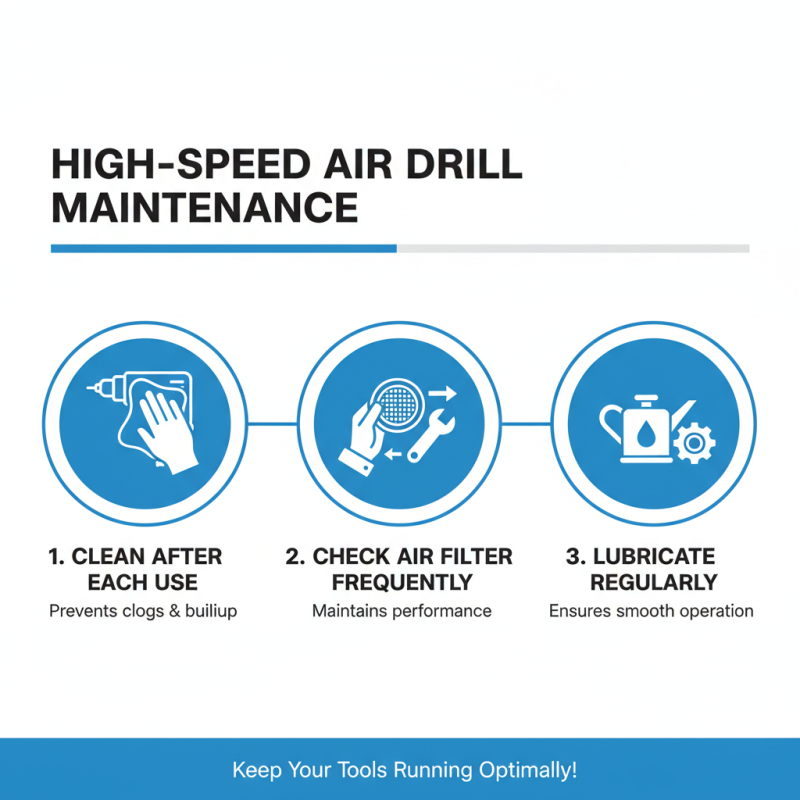
High-speed air drills are essential tools for various tasks. To keep them functioning optimally, regular maintenance is key. First, always clean the drill after each use. Dust and debris can clog its mechanism. A simple cloth wipe can prevent buildup. Additionally, check the air filter frequently. A dirty filter can lower performance.
Lubrication is another critical aspect. Use proper oil to ensure smooth operation. Apply it sparingly to avoid excess. Too much oil can attract more dirt. Keep an eye on the hoses and fittings. A worn-out hose can lead to air leaks. Inspect them regularly to avoid disruptions.
Over time, high-speed air drills may start to show signs of wear. Listen for unusual noises during operation. They can indicate potential issues. If you notice any problems, address them quickly. Delaying repairs can result in costly replacements. Reflect on your usage habits. Proper care extends the life of your tools, saving you money in the long run.